


Some British travellers skip over articles about the Canary Islands because of their mass tourism reputation. To do so suggests they don’t know about the islands beyond an exaggerated tag cultivated mostly by the travel industry, but also in part by the UK media.
At this time of year, articles about the Canaries start to appear in numbers in the UK press, tapping into the beginning of the winter sun season. The Canaries are good business. Because of this, most of these are aimed at visitors who stay in an area that covers less than 2% of the total landmass (source: Gobierno de Canarias).
Which is why I was keen to have the refurb of our Real Tenerife website done and dusted by the end of September. One of the changes to the site is a section for more features about all the Canary Islands. Although Andy and I have experience of the resort side of the islands as well, the part that interests us more, because it is far more interesting, is that other 98%.
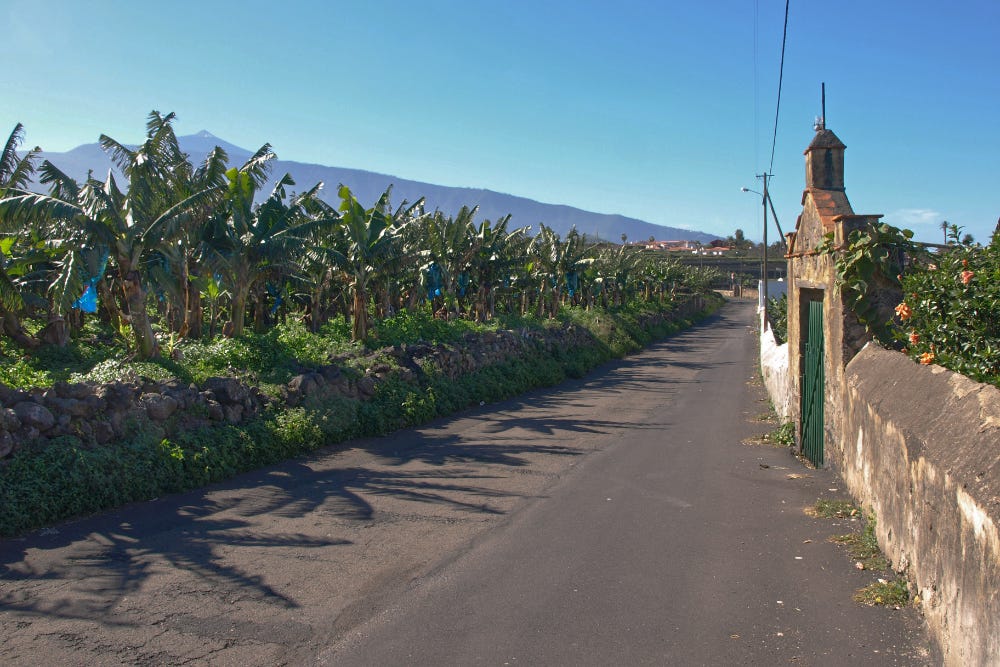
Tenerife
We lived in a house in the middle of a banana plantation in the north of Tenerife for fourteen years. Our introduction to the authentic side of an island better known for mass tourism started within two weeks of arriving, when I was mistaken for Tenerife’s Ambassador to Ireland at a wine awards (long story). This indirectly led to us becoming feature writers for a monthly magazine, which subsequently opened the door to a Tenerife we hadn’t a clue existed – one of diverse gastronomy, quirky traditions, and a vibrant culture. Having a neighbour who may or may not have been a spy helped. He’d come out with ridiculous and obscure stories that invariably turned out to have some truth, such as one about a German spy who, during WWII, experimented on chimpanzees in a house not far from us.
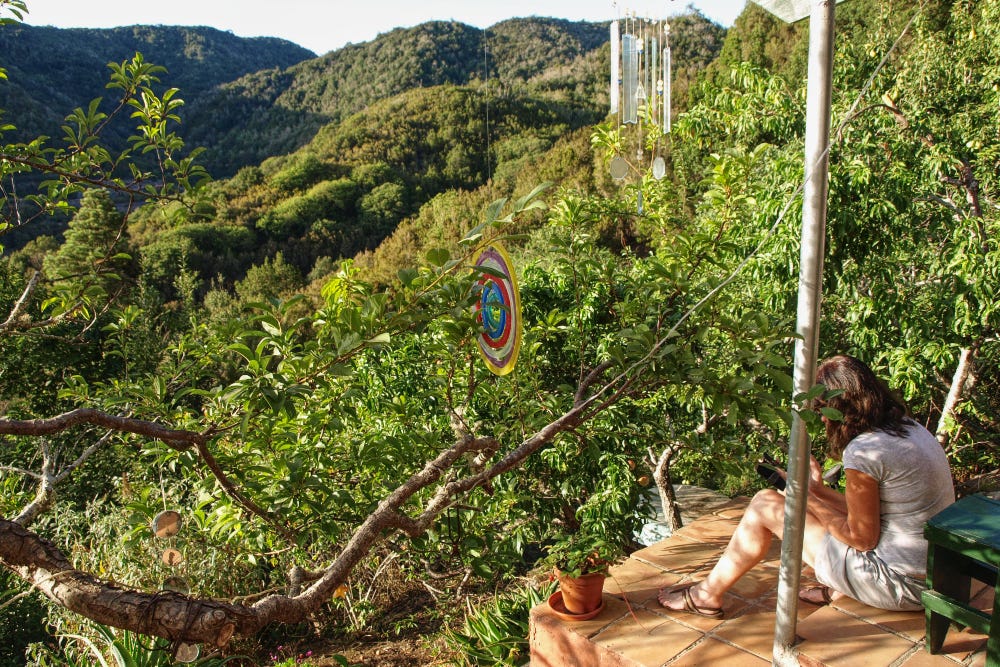
La Gomera
Thanks to having a friend who has a house in a remote valley on the edge of the Garajonay ancient rainforest, we knew La Gomera long before we spent any time on Tenerife. Due to the shape of the island, it can be quicker to walk across the hills to neighbouring houses than to drive to them. Some experiences bordered on being too authentic – going to a bar frequented by construction workers from the Spanish mainland because our friend fancied the owner. After much alcohol was consumed, we were caught in the middle of a barroom brawl, with one of the workmen swinging a motorcycle chain around because he’d been refused a drink.
We also wrote directions for hiking routes across La Gomera, leading to far more serene experiences.
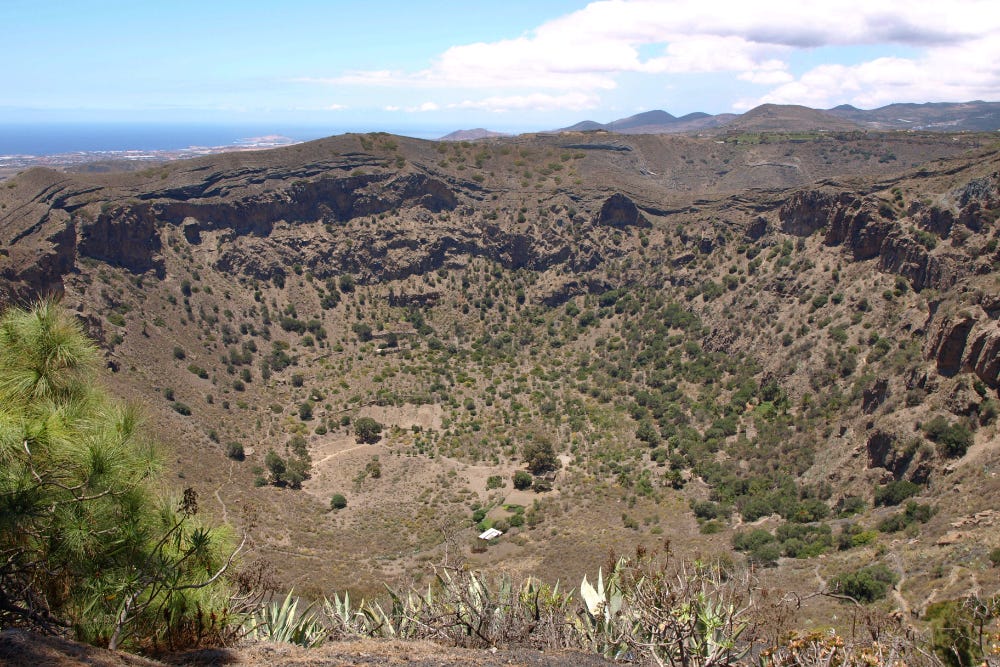
Gran Canaria
We got to know Gran Canaria by sewing together hiking trails across the island for self-guided holidays, including walking from just above the south coast to the edge of the sea in the north. Prior to this, we’d hiked with a local guide, Armando, who taught us how to eat prickly pear from straight from the cactus without getting a mouthful of spines. He also introduced us to a grump of a man who lived in the base of a caldera, and who responded to walkers who passed through more amiably if they presented him with beer. He was the inspiration for one of the stories in my book By the Time Dawn Breaks.
Insights into Las Palmas de Gran Canaria came from being shown around by Victor Ordóñez, lead singer of Gran Canaria indie rock group The Good Company (an excellent band whose music was refreshing to our ears as most of what we heard on Tenerife was reggaeton and Latino).
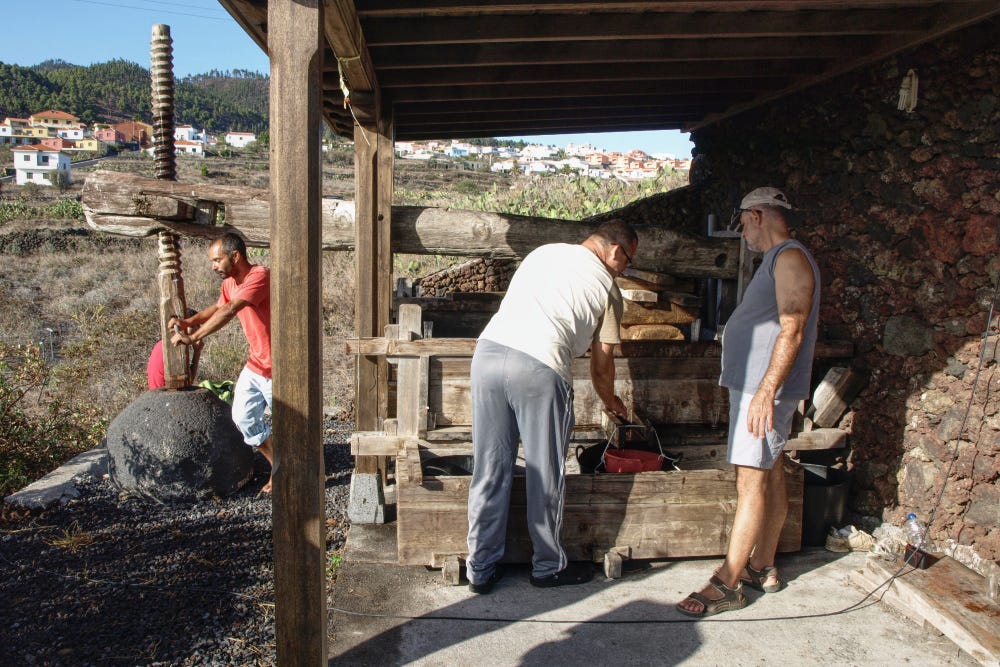
La Palma
Although we lived on Tenerife, La Palma was our favourite Canary Island. It doesn’t have mass tourism, but it does have many of the ingredients we liked most about Tenerife. We criss-crossed the island many times writing hiking directions and also making connections with a local journalist, Daniel, and an exceptional hiking guide, Jonas, both of whom introduced us to a cast of interesting characters – women who still hand-rolled cigars in a tiny factory that looked like it could have been in Cuba, and one of the only female wine producers in the Canaries. One experience that still sticks out is passing an old lagar (wine press) and being handed cups of freshly pressed grape juice from vines cultivated on volcanic slopes. The last time we saw Jonas he took us to a restricted area, the edge of the Tajogaite Volcano which erupted in 2021.
Lanzarote
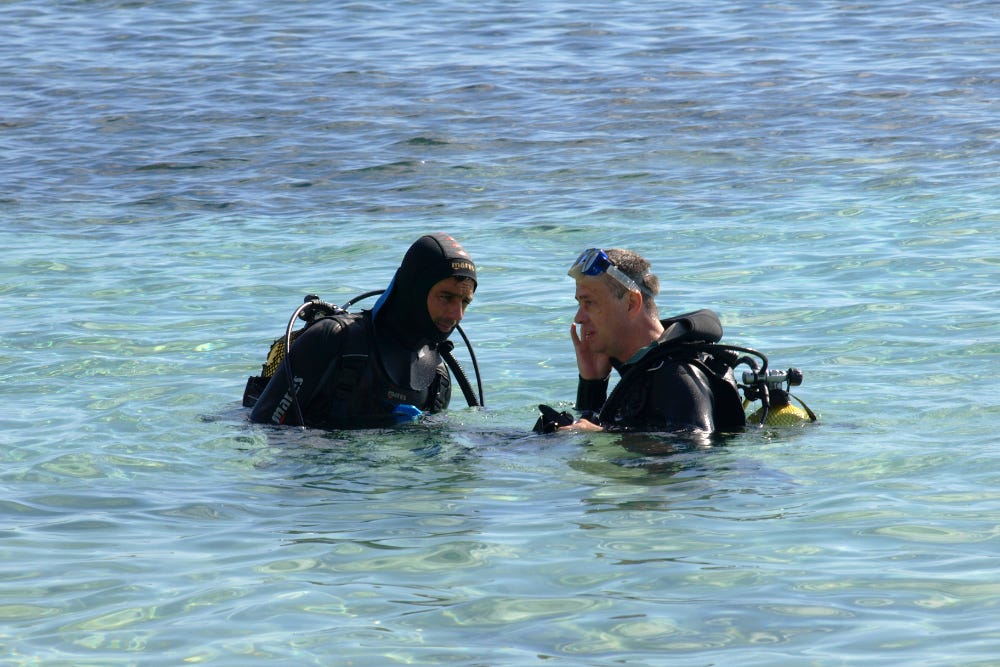
Lanzarote is the one Canary Island we haven’t written a walking guide for. However, for a few years we wrote blogs for a hotel in Costa Teguise that was popular with sportspeople (triathletes, swimmers, cyclists, and runners) from across Europe because of its facilities. This involved us visiting Lanzarote every so often to stock up on material to write about. This could range from sports (diving, SUP, hiking) and gastronomy to interviewing locals (e.g. having lunch with the mayor of Teguise). With a different writing hat on, we also commissioned Lanzarote-based writers to produce destination content for a UK travel company.
Fuerteventura
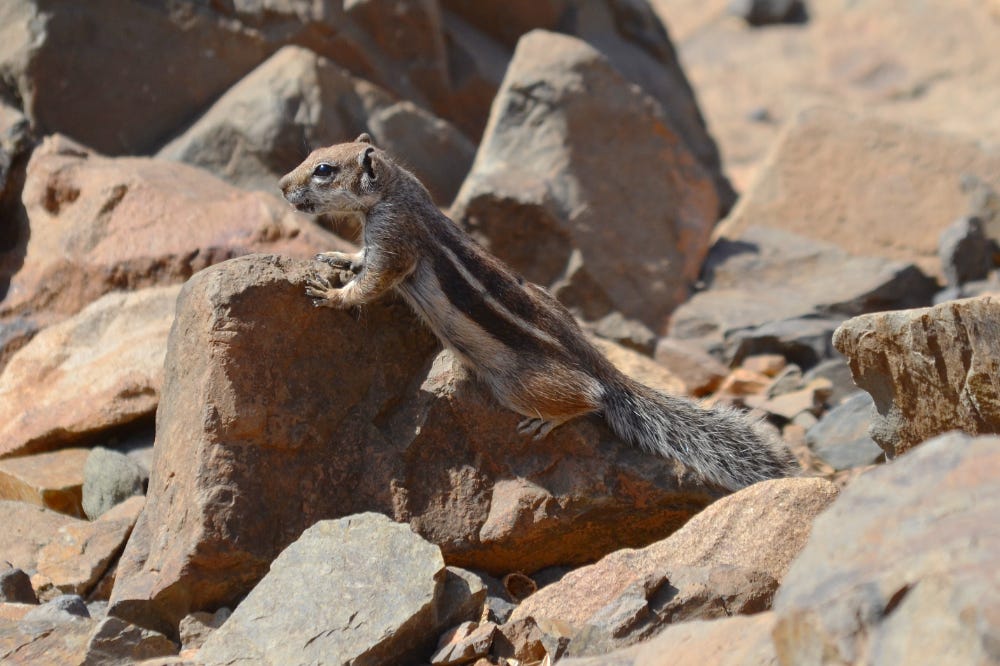
It took us years to visit Fuerteventura. Statistically, the Canary Islands with the highest volume of all-inclusive visitors are Fuerteventura followed by Lanzarote. Plus, there’s less of a Canarian population on the eastern islands, so culturally more diluted. One Spanish satirical magazine even went as far as to claim you got to make a wish if you ever encountered a true local. Being invited on a press trip showed us there might be more to Fuerteventura than we thought. Posting a photo from one experience on the socials acted as a catalyst for return visits to create Slow Travel holidays on the island. These involved walking across and getting to really know the island while being regularly mugged by the legions of Barbary squirrels that have overrun some areas. They’re an invasive species, but ridiculously cute.
El Hierro
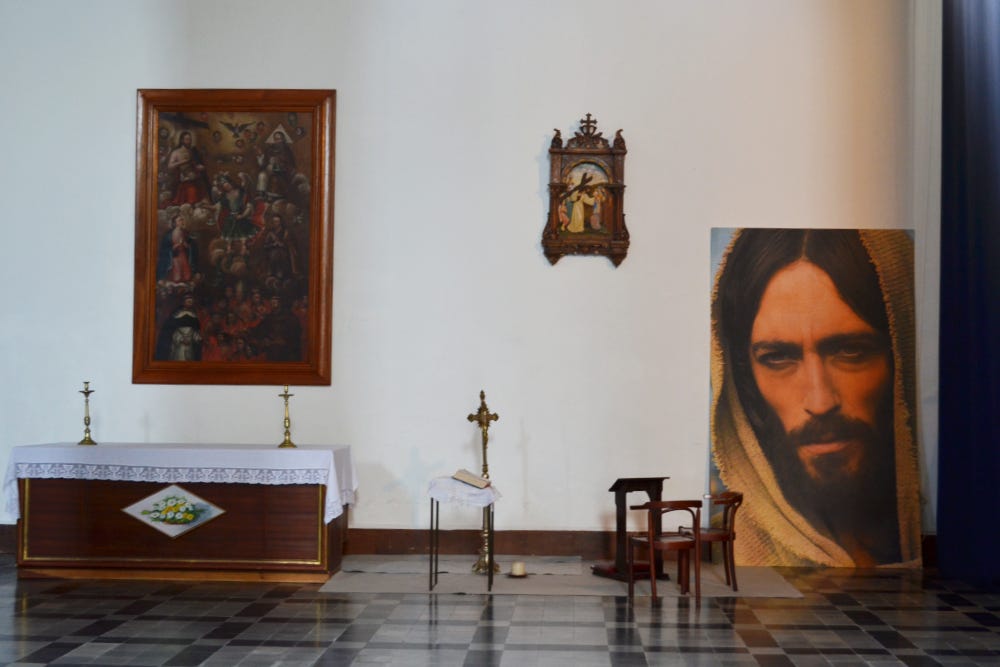
El Hierro is the most magical island of all for a number of reasons. Taking the ferry can be a drag (two-and-a-half hours), especially if the sea is choppy. One time, Andy and I were the only passengers not puking up. Andy because she’d taken seasickness pills, me because I grew up with ferry travel on waters that could be choppier than the crossing between the Canaries. Again, we wrote hiking directions for various routes across El Hierro. It’s not a big island. Over the years, we covered most of it, notching up quirky little experiences along with the kilometres – a kitsch Valentine’s night dinner in La Frontera, us in hiking gear in a darkened room of smoochy locals; an owl joining us on the balcony of our room in a rural hotel; being caught up in a hunt for escaped piglets in El Hierro’s hinterland (the abuela left a gate open); entering a church in Valverde to find a huge image of Jesus they had was actually of actor Rober Powell in Franco Zeffirelli’s TV series Jesus of Nazareth.
These are just a selection of tiny fragments from the main islands (I haven’t included the smaller ones) to illustrate the Canaries Andy and I are familiar with, and love, rarely match up with the mass tourism image they’re famous for.
Totally agree, especially about La Palma
Thinking of going, so a timely read, thanks!